
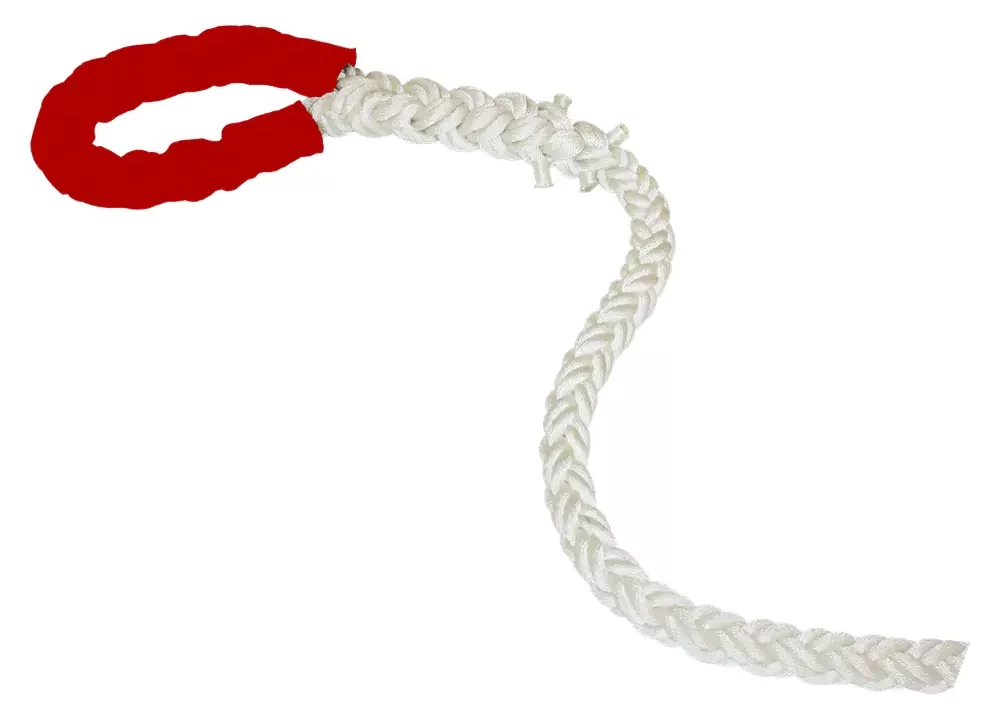
A mooring line keeps your vessel safe through tides, wind and passing wash. Choosing the wrong rope can mean chafe, snapped lines or damage to cleats and fairleads.
Four questions decide the right choice: what material, what construction, what diameter and how it will be protected.
1. Start with the material
The fibre decides how much the rope stretches, how strong it is and whether it floats.
- Nylon (polyamide): Stretches 15–28% before breaking, so it absorbs shock loads from swell and wash. A strong choice for dock lines and anchor lines on yachts and small craft. It sinks and loses some strength when wet.
- Polyester: Lower stretch, excellent UV and abrasion resistance, and almost the same strength wet or dry. A durable all-round mooring line for berths that see steady loads.
- Polypropylene and polyolefin blends: Light, easy to handle and they float. Popular for workboats, fishing vessels and tug lines where buoyancy matters.
- HMPE (UHMWPE), such as HOPEX™: Stronger than steel wire of the same size at about one-seventh of the weight, with under 4% stretch. The standard for large commercial vessels and offshore work.
2. Choose the construction
- 3-strand twisted: Easy to splice, affordable and good grip on cleats. Ideal for leisure mooring and anchor lines.
- 8- and 12-strand braided: Torque-free and resist kinking, so they run smoothly on winches and drums. Common on commercial ships.
- Double braid (braid-on-braid): A soft, round line with a protective cover. Comfortable to handle and long-lasting on yachts.
3. Get the diameter right
For leisure boats, size your mooring line to boat length. As a starting point:
| Boat length | Approx. displacement | Mooring line diameter |
|---|---|---|
| 25 ft (8 m) | 1 t | 10 mm |
| 35 ft (10 m) | 2 t | 12 mm |
| 40 ft (12 m) | 5 t | 16 mm |
| 45 ft (14 m) | 12 t | 18 mm |
| 50 ft (16 m) | 20 t | 24 mm |
Heavier boats, exposed berths and strong tidal flow call for the next size up. For commercial vessels, lines are sized to the ship’s Line Design Break Force (LDBF) under OCIMF MEG4 guidelines, so speak to our team with your vessel details.
4. Protect the line
- Mooring tails of nylon or polyester add shock absorption when your main line is a low-stretch HMPE or wire rope.
- Chafe guards stop wear where the line passes through fairleads or over the dock edge.
- Rubber springs (snubbers) soften sudden jerks in harbours with surge.
- Spliced eyes keep more of the rope’s strength than knots.
5. Quick picks
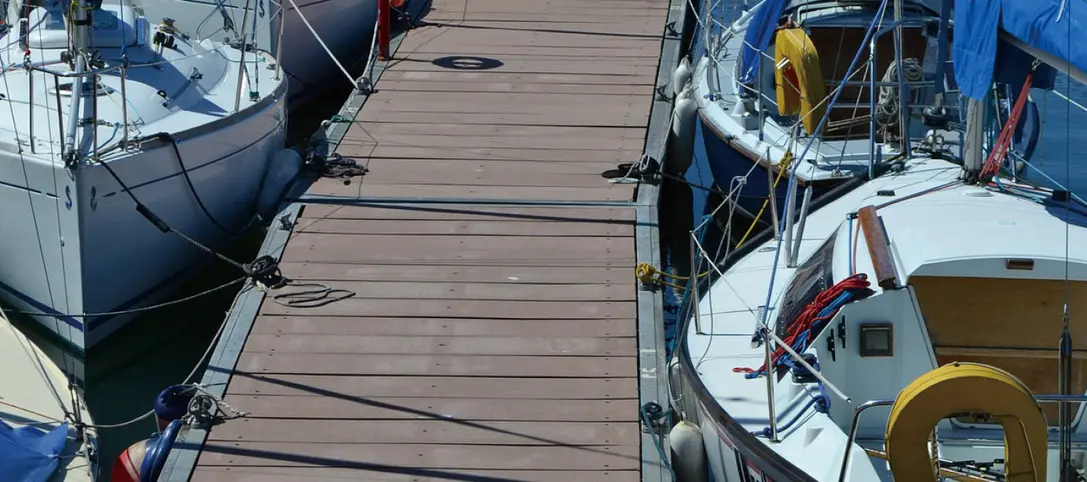
- Yacht or motorboat at a marina: Polyester double braid or 3-strand nylon, with spliced eyes.
- Exposed berth with swell: Nylon lines plus rubber springs.
- Workboat or fishing vessel: Floating polyolefin or Tough-Mix 8-strand.
- Commercial ship: HMPE main lines with nylon or polyester mooring tails, to MEG4.
Not sure which rope fits your vessel? Request a quote with your boat length, displacement and berth type, and our team will recommend the right line.