
An electric fence keeps livestock in and predators out with a short, safe pulse rather than physical strength. It is cheaper and quicker to build than a solid fence, but it only works when every part is chosen correctly.
How an electric fence works
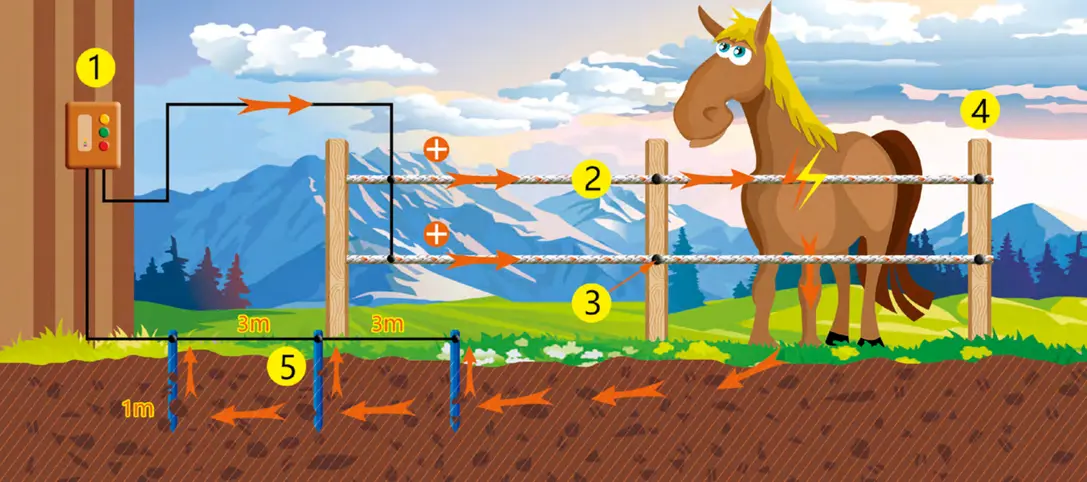
Every system has five parts:
- Energiser: Sends a short electric pulse along the fence.
- Conductors: Polywire, polyrope, polytape or braid rope carry the pulse.
- Insulators: Hold the conductor on the post and stop current leaking into it.
- Posts: Wooden, metal, T-posts or rod posts that support the line.
- Earthing: Earth rods return the current to the energiser when an animal touches the fence. Use at least three rods about 1 m deep and 3 m apart.
Choosing the right conductor
Longer fences and heavy vegetation need conductors with lower resistance, so the pulse stays strong all the way along.
| Conductivity | Resistance | Suits |
|---|---|---|
| Excellent | Under 0.17 Ω/m | Long fences, wild boar, heavy vegetation |
| Good | Up to 0.4 Ω/m | Medium fences and permanent paddocks |
| Medium | Up to 4.0 Ω/m | Shorter runs and strip grazing |
| Normal | Up to 15 Ω/m | Short temporary fences |
- Polywire (2–3 mm): Light and economical for temporary and strip grazing.
- Polyrope (3–8 mm): Stronger and more visible, ideal for horses and longer permanent lines.
- Polytape (10–40 mm): Wide and highly visible, the best choice for horses. Wider tape catches more wind, so tension it well.
- Braid rope: Strong, long-lasting and resists stretching, for permanent fences.
Look for conductors with tinned copper wires alongside stainless steel. Copper conducts far better, while stainless steel adds strength.
Choosing insulators
Match the insulator to your post and conductor:
- Ring and screw-in insulators: For wire, polywire and polyrope up to 6 mm on wooden posts.
- Wide tape insulators: For polytape up to 40 mm.
- Offset and extended insulators: Hold the line 155–220 mm away from the post, ideal for adding electric lines to an existing fence.
- T-post and rod post insulators: Snap or clip onto metal posts.
- End strain and corner insulators: Take the tension at the start, end and corners of a run.
- Gate anchor insulators and gate handles: Let you open a gate safely while keeping the circuit live.
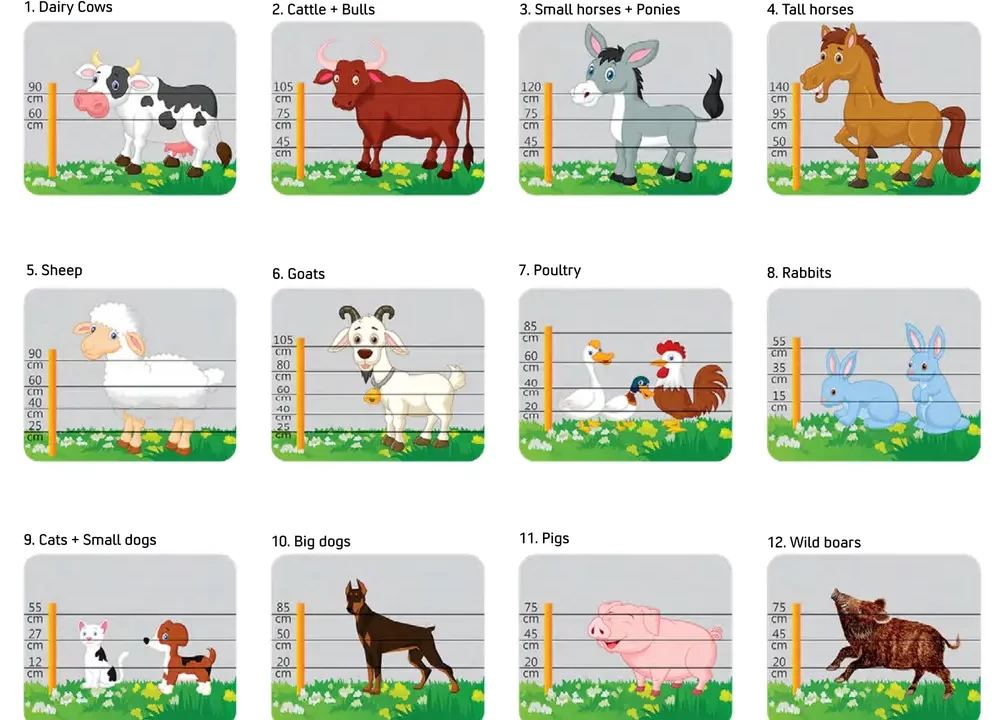
Recommended fence heights
Set the number of lines and their heights to your animals. Measure each line from the ground.
| Animal | Recommended line heights |
|---|---|
| Dairy cows | 90, 60 cm |
| Cattle and bulls | 105, 75, 45 cm |
| Small horses and ponies | 120, 75, 45 cm |
| Tall horses | 140, 95, 50 cm |
| Sheep | 90, 60, 40, 25 cm |
| Goats | 105, 80, 60, 40, 20 cm |
| Pigs and wild boar | 75, 45, 20 cm |
| Poultry | 85, 60, 40, 20 cm |
| Rabbits | 55, 35, 15 cm |
| Large dogs | 85, 50, 20 cm |
| Cats and small dogs | 55, 27, 12 cm |
Always allow for your animals’ size and jumping ability, and check any local regulations or insurance requirements.
Quick maintenance tips
- Keep grass and branches off the bottom line to stop power loss.
- Check tension regularly, especially on polytape in windy weather.
- Test the voltage at the far end of the fence, not just near the energiser.
- Replace cracked insulators straight away.
Planning a new fence? Contact our team with your fence length and animals, and we will put together the right conductor, insulators and accessories.